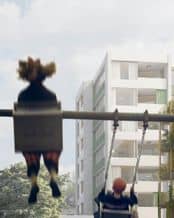
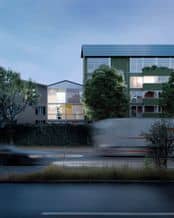
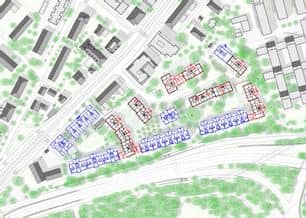
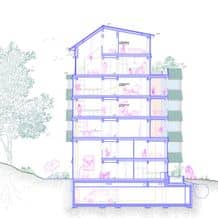
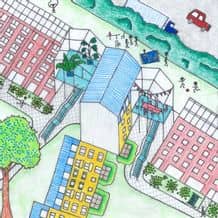
The pastamista collective has made the Hirschwiese housing estate in Zurich a pioneering example of sustainable development in housing construction. At the heart of the project is the consistent decision to conserve and largely reuse the existing structure rather than replace it with new buildings. The existing structure of the garden city, with its extensive green spaces and characteristic apartment buildings, is not to be replaced, but its quality is to be enhanced and adapted to current needs.
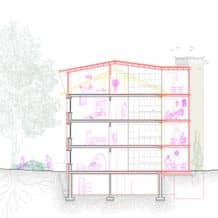
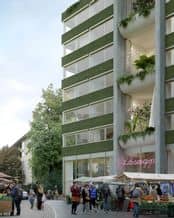
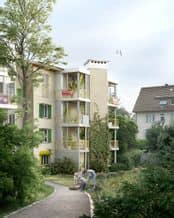
The project is based on a clear principle of reuse: the structures of existing buildings are carefully analyzed, their substance is preserved and they are transformed on an ad hoc basis. Rather than planning major demolitions, pastamista focuses on specific interventions. Some buildings are strengthened and enhanced by additions and transformations, such as additional floors, new floor plans or communal spaces. This architectural approach not only saves resources and grey energy, but also preserves the evolving character of the neighborhood - an important basis for social identity and neighborliness.
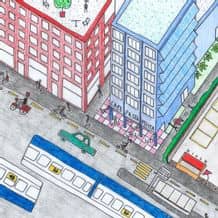
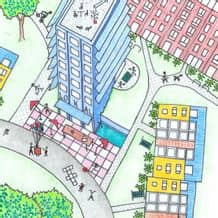
At the same time, the urban structure is being developed: new paths, careful densification and the opening up of the neighborhood to the outside world strengthen links with the environment. Common spaces, gardens and open courtyards encourage cohabitation and create space for a variety of housing forms - from classic family apartments to community housing projects. The interaction between old and new is not seen as a rupture, but as a productive dialogue.
The Hirschwiese is not a purely residential area, but a lively, mixed-use site that builds on existing qualities. The pastamista attitude shows that reuse in housing construction is not only possible, but can also be beneficial in design and social terms. The development becomes an example of how a contemporary, forward-looking neighborhood can be created with respect for the existing and through an open planning process.